



Ayurvedic Treatment for Skin Disorders
Ayurvedic Treatment for Skin Disorders in Delhi | Nirmal Ayurved
Skin conditions can have a major effect on the general health and appearance of a person. It is imperative to look for natural and efficient remedies in an environment where skin issues are frequently caused by environmental factors such as stress, pollution, and unhealthy lifestyles.
Ayurveda is the traditional Indian medical field that is an effective solution for people who are suffering from a variety of skin conditions. Nirmal Ayurved is a reputable clinic that offers the best Ayurvedic treatment for skin disorders. Our clinic will help you completely in curing your skin disease so that it will not reoccur in future.
What are skin disorders?
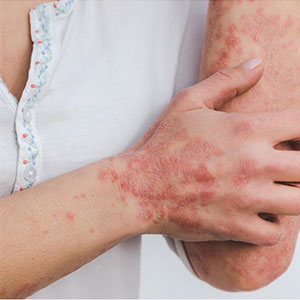
Skin diseases are a broad category of problems that impact the appearance, functionality, and health of the skin. These conditions range from simple ones like psoriasis, acne, and eczema to more complicated ones like vitiligo and dermatitis. They can be physically and psychologically draining for the person suffering those issues.
Skin disorders can arise due to a variety of factors, such as heredity, environmental contaminants, hormone imbalances, and lifestyle decisions. If you are looking for the best Ayurvedic clinic in Delhi, then we are here to help you. Nirmal Ayurved is a top choice of numerous patients for getting Ayurvedic treatment for skin disorders as identifying the underlying causes is essential to developing successful treatment plans.
Role of ayurveda in treating skin disorders
Skin diseases are signs of vata, pitta, and kapha dosha imbalances in the body according to the age-old holistic medical field known as Ayurveda. Ayurvedic principles state that entire health, including skin health, depends on these doshas remaining in a harmonious balance. Ayurvedic treatments try to address the underlying imbalances in addition to symptom relief to promote long-term recovery.
The Ayurvedic Perspective on Atopic Dermatitis: Unlocking the Architecture of Vicharchikā and Immune Confusion
Atopic Dermatitis (Eczema) is a chronic, intensely pruritic, relapsing skin condition. In conventional dermatology, it is primarily viewed as a combination of epidermal barrier dysfunction (such as filaggrin mutations) and an overactive Th2-mediated immune profile. Treatment is largely centered around topical corticosteroids, immunomodulators, and barrier creams.
Ayurveda offers an advanced, systemic perspective by identifying this condition as a manifestation of Vicharchikā (a prominent Kshudra Kushtha and Rakta Pradoshaja Vikara). Rather than treating it as a superficial skin issue, classical Ayurvedic medicine tracks its root to Ātma-Asātmya-Janya Vyādhi (a disease of internal self incompatibility/autoimmunity) and Ojo-Visraṁsa (the structural displacement of vital biological immunity) triggering an acute channel blockage (Mārgāvaraṇa).
The Pathophysiology: Loss of Self-Tolerance and Channel Occlusion
Pathological Mapping & Progression
The structural barrier breakdown and immunological flares of Atopic Dermatitis match the Ayurvedic concept of Kushtha Vega (skin disease progression) affecting the Twak Rakta-Mamsa pathways:
| Clinical Feature of Atopic Dermatitis | Modern Pathophysiology | Ayurvedic Medical Correlation |
| Epidermal Barrier Dysfunction | Mutations in the filaggrin gene (FLG) leading to transepidermal water loss, extreme xerosis, and structural splitting. | Rukshata & Shyaavata (Vata): Profound depletion of the skin’s unctuousness (Snigdha Bhava), leading to cracking, thickening, and hyperpigmentation. |
| Intense Pruritus (Itching) | Activation of cutaneous pruriceptors by Th2 cytokines (IL-4, IL-13, IL-31) and histamine release. | Kandu (Kapha): The dominant manifestation of vitiated Kapha clogging the localized skin pores and sensory nerve endings. |
| Erythema, Exudation & Crusting | Acute inflammatory cell infiltration causing vasodilation, vesicle formation, weeping, and secondary bacterial infections. | Lasa / Srava / Daha (Pitta-Rakta): Active thermal inflammation driven by Rakta and Pitta causing burning, oozing of fluid (Srava), and scaling. |
| Chronic Lichenification | Persistent scratching leading to hyperkeratosis, acanthosis, and structural leathery thickening of the skin folds. | Raji / Bahu-Bahala (Vicharchika): The classical presentation of deep-seated, raised, thickened linear lesions from prolonged humoral stagnation. |
Healthy skin barrier function and immune recognition are sustained by Ojas—the ultimate essence of physiological vitality. When the body’s digestive fire (Agni) falls into a sluggish state (Agni Mandya), it creates Āma (undigested toxic complexes). This Āma enters circulation and initiates a dual-layered pathology:
- Ātma-Asātmya: The biological intelligence of the immune system becomes compromised. Friendly structural elements of the skin barrier are misidentified as
foreign or incompatible (Asātmya), causing the body to turn its defensive fires inward. - Ojo-Visraṁsa: The protective essence of Ojas slips from its natural equilibrium, entering a state of hyper-reactivity (Visraṁsa). This immune confusion triggers
inflammatory responses in the Twak (skin), Rakta (blood), Māmsa (muscle tissue), and Ambu (lymph/fluids).
The Structural Consequence: Mārgāvaraṇa in Skin Tissues
As these elements combine, they form a thick, sticky layer of metabolic waste that coats the micro-channels (Srotas). This leads to an intense Mārgāvaraṇa (channel
occlusion). When these pathways are blocked, Vāta and Pitta doshas become severely trapped beneath the epidermis, causing the definitive symptoms of Vicharchikā described in the Charaka Samhita:
सकण्डूः पिडिका श्यावा बहुस्रावा विचर्चिका ॥
— चरक संहिता, चिकित्सा स्थान, ७/२६
“Sa-kaṇḍūḥ piḍakā śyāvā bahu-srāvā vicharchikā ||”
(Charaka Samhita, Chikitsa Sthana, 7/26)
The Classical Definition: Eruptions presenting with agonizing itching (Kaṇḍū), dry or fluid-filled papules (Piḍakā), dark or hyper-pigmented skin thickens (Śyāvā), and
profuse oozing or discharge (Bahu-srāvā) are diagnosed as Vicharchikā.
Classical Scriptural
A. Pathognomonic Presentation of Eczematous Lesions (Vicharchika)
Acharya Charaka provides the foundational definition of Vicharchika, detailing the triad of itching, eruption, and hyperpigmented thickening:
सकण्डूः पिडिका श्यावा बहुस्रावा विचर्चिका ।
(Charaka Samhita, Chikitsa Sthana, Chapter 7, Shloka 26)
- sakaṇḍūḥ piḍikā śyāvā bahusrāvā vicarcikā |
- Vicharchika is clinically identified by the presence of intense pruritus/itching (Sa
kandu), papular or vesicular eruptions (Pidika), a dark or hyperpigmented
discolouration (Shyava), and profuse oozing or discharge (Bahu-srava).
B. The Multi-Humoral Manifestation of Chronic Skin Lesions
Acharya Sushruta elaborates on Vicharchika by highlighting the structural leathery thickening (Raji) and painful cracking, which closely matches chronic lichenified Atopic Dermatitis:
राजीभिः अतिसकण्डूः रूक्षा श्यावा विचर्चिका ।
(Sushruta Samhita, Nidana Sthana, Chapter 5, Shloka 15)
- rājībhiḥ atisakaṇḍūḥ rūkṣā śyāvā vicarcikā |
- Vicharchika manifests as prominent, thickened skin lines or ridges (Rajibhihi), unbearable itching (Ati-sakandu), severe structural dryness (Ruksha), and dark, leathery discolouration (Shyava).
C. The Fourfold Pathological Stagnation (Kushtha Dravya Sangraha)
No chronic inflammatory skin condition occurs in isolation. Acharya Charaka establishes the seven physical factors that form the unalterable pathological substratum for conditions like Atopic Dermatitis:
वातपित्तश्लेष्माणस्त्रयो दूष्याश्च त्वङ्मांसरोधिरलसिकाः सप्तैवं द्रव्यसंग्रहाः कुष्ठानाम् ।
(Charaka Samhita, Nidana Sthana, Chapter 5, Shloka 3)
- vātapittaśleṣmāṇastrayō dūṣyāśca tvaṅmāṁsarūdhiralasikāḥ saptaivaṁ
dravyasaṅgrahāḥ kuṣṭhānām | - Clinical Meaning: The three physiological humors—Vata, Pitta, and Kapha—along with the four structural tissues—the epidermis/skin (Twak), muscle tissue (Mamsa),
blood (Rudhira/Rakta), and lymph/interstitial fluid (Lasika)—together constitute the sevenfold essential factor-complex (Sapta Dravya Sangraha) responsible for the generation of all chronic skin diseases.
Ayurveda vs. Conventional Medicine: Atopic Dermatitis Matrix
| Feature | Conventional Dermatology | Ayurvedic Dermatology (Mārgāvaraṇa Model) |
| Primary Root | Epidermal barrier defects (Filaggrin mutation) + Th2 allergy profiles. | Āma causing Mārgāvaraṇa (blockage), causing immune displacement (Ojo-Visraṁsa). |
| Core Presentation | Flexural eczema, intense itching, erythema, scaling, oozing. | Kaṇḍū (itching), Piḍakā (papules), Śyāvā (lichenification), Bahu-srava (oozing). |
| Therapeutic Target | Symptomatic suppression via topical steroids or systemic immunomodulators. | Systemic Śrotashodhana (channel purification) to clear blocks, followed by immune re-education. |
| Long-Term Focus | Continuous flare containment and symptom tracking. | Repairing Agni, establishing deep self-tolerance (Sātmya), and stabilizing Ojas. |
Integrated Treatment Principles (Chikitsa Sutra)
The clinical management of Atopic Dermatitis requires stabilizing the hyper-reactive
immune system, eliminating systemic triggers (Ama / metabolic waste), and
structurally repairing the skin barrier.
[DIAGNOSED ATOPIC DERMATITIS / VICHARCHIKA]
│
▼
1. Acute Barrier & Allergen Management (Conventional Control)
├── Topical Corticosteroids / Calcineurin Inhibitors (Elidel / Protopic)
└── Emollient Therapy & Trigger Identification (Avoid Allergens)
│
▼
2. Ayurvedic Internal Detoxification & Agni Balancing
└── Ama-Pachana using Tikta-Katu herbs (Musta, Patola, Nimba)
│
▼
3. Bio-Purification (Shodhana Karma)
├── Mild, Repeated Purgation (Mridu Virechana via Eranda Taila / Mahatikitaka
Ghrita)
└── Blood-Letting (Raktamokshana via Leeches) for localized acute flares
│
▼
4. Skin Barrier Repair & Immunomodulation (Rasayana)
├── Abhyanga & Lepa (Marichaadi / Jatyadi Tailam / Coconut-Neem
combinations)
└── Internal Immuno-modulation: Gandhak Rasayan & Panchatikta Ghrita
Rasayan
Step 1: Barrier Restoration & Flare Control (Conventional Paradigm)
- Topical Anti-inflammatories: Targeted use of topical corticosteroids or topical calcineurin inhibitors (Pimecrolimus/Tacrolimus) to calm acute, weeping lesions and break the itch-scratch cycle.
- Aggressive Moisturisation: Application of ceramide-dominant emollient creams within 3 minutes of bathing to halt transepidermal water loss.
- Systemic Modulation: For severe, non-responsive cases, modern protocols incorporate biological therapies (like Dupilumab) or short-term systemic immunosuppressants.
Step 2: Systemic De-toxification & Gut-Skin Axis Correction (Ama-Pachana)
Because Atopic Dermatitis is driven by hypersensitivity, treatment begins by purifying the metabolic fire (Agni) to stop the production of circulating bio-toxins (Ama):
- Herbal Administration: Bitter-pungent compounds such as Patola Katurohinyadi Kwath, Amritadi Guggulu, and Mahamanjisthadi Kwath are prescribed to cleanse the blood (Rakta-Prasadana) and decrease systemic Kandu (itching).
- Dietary Correction: Complete elimination of Viruddha Ahara (incompatible foods like milk with fish/sour fruits, or excessive fermented foods) which act as immediate triggers for Th2-cytokine flares.
Step 3: Controlled Bio-Purification (Shodhana)
Acharya Charaka provides a strict directive for chronic skin conditions: because the humors flare up repeatedly, the detoxification must be gentle and recurrent rather than aggressive.
- Mridu Virechana (Gentle Purgation): Administering medicated purgatives processed with bitter herbs, such as Mahatikitaka Ghrita or Nimbamritadi Eranda Taila. This clears Pitta and Rakta toxicity from the gut, reducing skin weeping and redness.
- Raktamokshana (Leech Therapy / Jalaukavacharana): In cases of severe, localized, intensely painful or lichenified plaques, applying medicinal leeches removes
localized stagnant blood (Dushi Rakta), instantly bringing down swelling, heat, and itching.
Step 4: Skin Barrier Repair & Immunomodulation (Twak-Prasadana & Rasayana)
- External Oleation (Abhyanga & Lepa): Application of non-irritating, soothing oils like Jatyadi Taila, Marichadi Taila, or pure cold-pressed coconut oil processed with Neem
(Nimba) and Turmeric (Haridra). This mimics the lipid barrier, softens lichenified tissue, and prevents secondary Staphylococcus aureus colonization. - Immuno-modulatory Formulations: Internal use of Gandhak Rasayan, Panchatikta Ghrita Guggulu, and Khadirarishta. These formulations alter the systemic immune
response (Vyadhikshamatva), downregulate skin hypersensitivity, and significantly extend the duration of symptom-free remission phases.
Our Three-Phase Treatment Protocol: Restoring Cellular Balance
In an active Mārgāvaraṇa state, standard eczema management based on immediate heavy moisturizers or oil-based applications (Snehana) will fail. Coating blocked skin channels acts like sealing hot, toxic grease inside a pipeline. It traps heat, thickens the Āma blockages, and triggers severe, explosive itching cycles.
Our protocol deploys a sequential, three-tiered clinical journey to systematically rebuild the skin from within:
[ Phase 1: Immunity Remodulation ] ──► (Virechana: Clears Avaraṇa)
[ Phase 2: Immunity Restructuring ] ──► (Śamana: Corrects Asātmya)
[ Phase 3: Immunity Stability ] ──► (Rasāyana: Anchors Ojas)
Phase 1: Physical & Immune Remodulation (Target: Breaking the Mārgāvaraṇa)
Before the skin barrier can assimilate hydration or realign its immune parameters, the dense toxic blocks in the Raktavaha and Rasavaha srotas must be eliminated. This
phase achieves deep Immunity Remodulation by flushing out the physical substrate of inflammation.
कफपित्तावृतं मार्गं विशोधयति सत्वरम् ॥
— चरक संहिता, चिकित्सा स्थान, २८/९३
“Kaphapittāvṛtaṁ mārgaṁ viśodhayati satvaram ||”
(Charaka Samhita, Chikitsa Sthana, 28/93)
- The Action: We administer Classical Virechana Karma (therapeutic, medicated purgation) as our primary tool for deep Srotoshodhana (channel purification).
- The Treatment Principle: Virechana directly targets and binds circulating immunotoxins (Āma), inflamed Pitta, and sticky Kapha. By evacuating these blocks from the GI tract, the Avaraṇa over the skin layers is lifted. This opens the micro delivery pathways, cools the blood (Rakta Prasādana), allows trapped Vātapitta to settle, and halts acute itching and weeping flares.
Phase 2: Immunity Restructuring (Target: Correcting Ātma-Asātmya)
With the cellular pathways thoroughly cleared and a clean, toxin-free state (Nirāma Avastha) established, the skin tissues enter the Immunity Restructuring phase. The cells are now completely unblocked and highly receptive to internal systemic repair.
स्रोतःमार्गे विमुक्ते हि भेषजं लभते बलम् ॥
— सुश्रुत संहिता, चिकित्सा स्थान, ३३/४
“Srotomārge vimukte hi bheṣajaṁ labhate balam ||”
(Sushruta Samhita, Chikitsa Sthana, 33/4)
- The Action: We introduce specialized, tailored Śamana Aushadha (palliative and corrective herbal complexes) matching the patient’s individual Prakriti (constitution).
- The Treatment Principle: Now that the skin channels are entirely liberated (Srotomārge vimukte), targeted blood-cleansing, anti-inflammatory, and soothing herbs (such as Kaishore Guggulu, Mahatiktaka Kwatha, and Nisha-Amalaki) can act at full capacity. This stage neutralizes the Ātma-Asātmya response, re-educates immune cell signaling, and repairs structural skin layers to stop thickening, dryness, and lichenification.
Phase 3: Immunity Stability (Target: Anchoring Ojas & Long-Term Barrier
Durability)
The final stage focuses on securing permanent systemic recovery, reinforcing the skin’s moisture retention, and preventing seasonal or stress-induced relapses through Immunity Stability.
- The Action: We introduce deep Rasāyana (immunomodulatory and tissue rejuvenating) formulations along with precise, non-clogging lipid tonics like Tikta
Shatavari Ghrita or Panchatikta Ghrita. - The Treatment Principle: Because the underlying Mārgāvaraṇa was dismantled in Phase 1 and the immune cell memories were corrected in Phase 2, these highly potent, nourishing lipid rejuvenators can safely penetrate deep into the skin tissue beds without forming new blockages. This process permanently stabilizes metabolic Agni, anchors Ojas back into its balanced state, and establishes an enduring, self-sufficient skin barrier.
Ayurveda treats skin disorders in many efficient ways
The foundation of Ayurvedic treatment for skin conditions is individualized holistic methods that consider the distinct conditions of patients. The essential components of the approach of Ayurveda for treating skin diseases are as follows:
Herbal formulations: Herbal formulations that are effective in detoxifying the body, cleaning the blood, and improving skin health are frequently prescribed in Ayurveda.
Dietary and lifestyle modifications: Ayurveda places a strong emphasis on the need to keep a diet that is dosha-specific and balanced. Dietary guidelines could advise avoiding foods that are too spicy or fatty, consuming more fresh fruits and vegetables, and drinking enough of water. The holistic approach of ayurvedic treatment for skin disorders also includes lifestyle changes including performing stress-relieving exercises like yoga and meditation.
Panchakarma therapy: An essential part of detoxifying the body is the practice of panchakarma, which is a series of Ayurvedic cleansing treatments.
Nirmal Ayurved is the top clinic offering the best Ayurvedic treatment for skin disorders
Nirmal Ayurved is renowned as a Ayurvedic Clinic in Delhi for offering unmatched Ayurvedic treatments for a range of skin conditions. Our method is based on conventional Ayurvedic principles and incorporates contemporary diagnostic techniques to provide a thorough condition for each patient. At Nirmal Ayurved, we ensure that skin conditions are effectively treated.
Each special issue and distinct situation of individuals is considered while creating our individualised treatment plans to achieve the best ayurvedic treatment for skin disorders. Our team of Ayurvedic doctors is very skilled in this field with years of experience in treating a wide range of skin conditions. Their in-depth understanding of Ayurvedic principles and dedication to the well-being of their patients guarantee that you will receive the best possible treatment.
Why choose our ayurvedic clinic in Delhi for having the best ayurvedic treatment for skin disorders
Following are many benefits of getting ayurvedic treatment for skin disorders at Nirmal Ayurved-
Holistic approach: we believe that it is important to tackle the underlying problem rather than only treating symptoms. Our all-encompassing strategy guarantees thorough ayurvedic treatment for skin disorders for long-lasting recovery.
Tailored treatment plans: The skin condition of each person is different, so the treatment plans are also distinctive. Our specialists at the Ayurvedic clinic design individualized treatment programs based on your unique requirements, thus guaranteeing a focused and successful strategy.
Natural and safe therapies: Nirmal Ayurved places a high priority on using safe and natural therapies rather than invasive procedures or dangerous substances. This dedication to alternative medicine is consistent with Ayurvedic teachings.
Patient-centric care: Our goal is to establish a solid doctor-patient connection by providing a caring and empathetic environment that supports you throughout your healing process.
Contact us to book the consultation at our Ayurvedic clinic in Delhi
Nirmal Ayurved stands out as the best clinic in treating skin disorders since it provides the best remedies for ayurvedic treatment for skin disorders based on age-old knowledge. People can make knowledgeable choices to commence a path towards enduring skin well-being by comprehending the complexities of skin conditions, acknowledging the significance of Ayurveda, and valuing the methodology of Nirmal Ayurved. Contact us to get the best skin treatment for your issue and bring back the brightness of your skin.
Frequently Asked Questions (FAQs)
When you are in an active state of Mārgāvaraṇa, your skin’s micro-channels are physically blocked from the inside by toxic fluids (Āma) and intense Pitta heat.
Smearing thick, heavy moisturizers or oils over these pathways seals those hot toxins within your skin layers. This amplifies the internal heat and thickens the blockages,
resulting in sudden, aggressive itching and burning flares. The internal pathways must be purified via Virechana first to make your skin safe for topical hydration.
During the deep purification phase, you must follow a structured, easily digestible dietary sequence (Samsarjana Krama). This focuses on warm, light, freshly prepared
grain-based soups (like mung bean broth) designed to keep your metabolic fire (Agni) clean without creating new Āma. You must completely eliminate heavy, damp
inducing foods (Abhishyandi), processed sugars, and incompatible combinations (Viruddha Āhāra) like milk consumed alongside sour fruits, fish, or salt.
While skin characteristics vary per individual, the acute inflammatory symptoms— such as intense nighttime itching, raw weeping, and burning—often reduce
dramatically within Phase 1 (Weeks 1–4) as Virechana evacuates the primary toxic overload. Long-term stabilization, skin color normalization, and full structural barrier restoration consolidate steadily during Phase 2 and Phase 3 (Weeks 5–12+) as the immune memory completes its restructuring.
No. While extreme dry skin (xerosis) is a primary feature of Atopic Dermatitis, it is a complex, genetic inflammatory immune condition. The skin barrier lacks the essential
lipids required to seal in moisture, making it highly susceptible to environmental allergens, irritants, and bacteria. Ayurveda explains this as a combination of severe Vata dryness (Rukshata) and Kapha/Pitta tissue inflammation.
In modern medicine, nocturnally increased itching is linked to natural circadian changes, such as a drop in the body’s anti-inflammatory cortisol levels and increased skin temperature at night. In Ayurveda, the evening and early night hours are dominated by Kapha and Vata cycles, which naturally elevate Kandu (itching) and Rukshata (dryness), triggering intense scratching reflexes.
Diet is a cornerstone of management. Ayurveda places massive emphasis on Viruddha Ahara (incompatible dietary combinations) as a primary cause of skin
disease. Combining milk with sour fruits, fish, or salt, or consuming excessive amounts of fermented, processed, and deeply fried foods creates Ama (unprocessed
bio-toxins). These toxins enter the bloodstream (Rakta Dhatu) and trigger systemic inflammatory flares that manifest on the skin.